What Actually Goes Into a Water Pump Replacement on Your Car
A water pump replacement in Plano typically involves pulling the old pump, swapping in a new unit, and replacing the gaskets, seals, and often the thermostat at the same time. The job touches the heart of your cooling system, so it's worth understanding what's being replaced and why each piece matters before you hand over your keys or call a mechanic.
What Does a Water Pump Actually Do?
The water pump is the component that keeps coolant moving through your engine. It circulates fluid from the radiator through the engine block and back again, pulling heat away from the combustion area before it can cause damage. Without that circulation, your engine temperature climbs fast.
The pump is driven either by the serpentine belt or, on many engines, by the timing belt. That second setup matters a lot for scheduling repairs, because if your timing belt is due anyway, replacing the water pump at the same time saves significant labor. Most mechanics will recommend doing both together for exactly that reason.
A failing pump usually gives you some warning. You might notice coolant pooling under the car near the front of the engine, a whining or grinding noise from the front of the motor, or your temperature gauge creeping higher than normal. Sometimes the weep hole on the pump itself starts dripping, which is the pump telling you its internal seal is going.
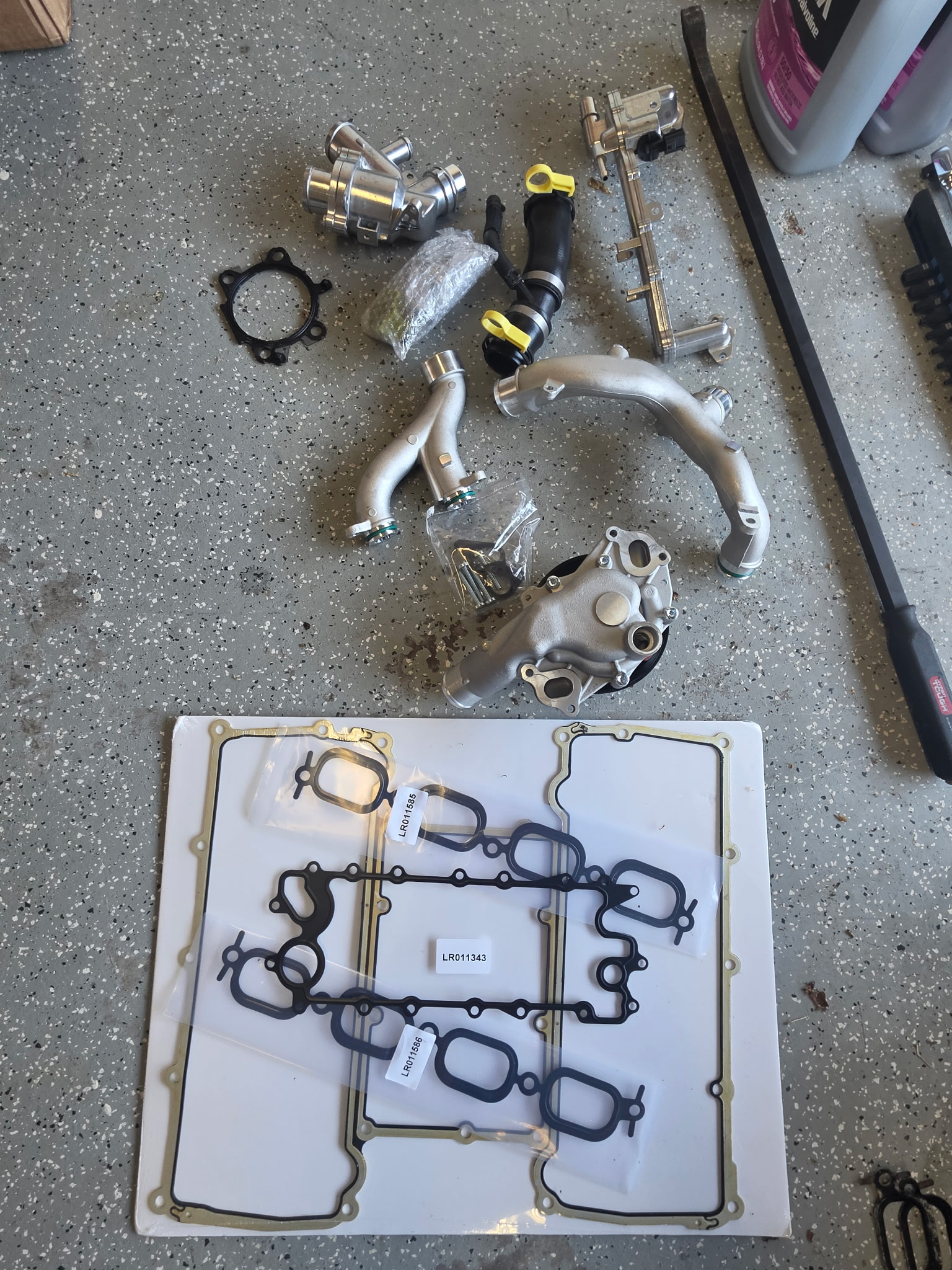
What Parts Are Involved in a Full Water Pump Job?
The Pump Itself
The new pump comes with an impeller inside that spins and pushes coolant through the system. Quality matters here. A cheap pump with a plastic impeller can fail faster than the original, so it's worth asking what brand your mechanic is installing. Cast iron or metal impellers hold up better over time.
Gaskets and Seals
The pump bolts to the engine block, and the mating surface needs a fresh gasket or sealant to prevent leaks. A complete job includes a gasket kit with multiple seals, not just the main pump gasket. Skipping any of these is how you end up with a coolant leak a week after the repair.
Thermostat Housing and Thermostat
On many engines, the thermostat sits right next to the water pump, and you have to remove the housing to get to the pump anyway. Replacing the thermostat at the same time adds minimal cost but eliminates a common failure point. If the thermostat sticks closed after the pump is already in, you're back to square one with an overheating engine.
Inlet and Outlet Pipes
The coolant has to get in and out of the pump through connecting pipes or hoses. If those pipes show corrosion, cracking, or wear, replacing them during the same service prevents a separate leak from showing up later. A thorough mechanic checks these while everything is already apart.
How Long Does a Water Pump Replacement Take?
The time varies a lot depending on where the pump sits on your specific engine. Some pumps are accessible and take two to three hours. Others are buried behind the timing cover and can take four to six hours or more. Front-wheel-drive vehicles with transversely mounted engines often have the pump tucked in a tight spot that adds time.
A mobile mechanic doing this job at your home or office needs a flat, safe surface to work on and access to the front of the engine. The job itself is the same whether it's done in a shop bay or your driveway. What changes is that you don't have to arrange a tow or sit in a waiting room.
Can You Drive With a Bad Water Pump?
Short answer: not safely. A pump that's leaking or not circulating coolant properly will let your engine overheat, and overheating causes damage that goes well beyond the cost of a pump. Head gaskets, warped cylinder heads, and cracked engine blocks are all downstream consequences of running an engine too hot.
If your temperature gauge is climbing or you see coolant on the ground, the safest move is to stop driving and get the car looked at before you turn a manageable repair into a major engine job. That's exactly the kind of situation where having a mechanic come to you makes sense, since driving the car to a shop could make things worse.
If you're dealing with cooling system trouble and want a mechanic who comes to you, Any Hour Mobile Mechanic handles water pump replacements and full cooling system repairs wherever your car is sitting. You can also find more repair guides and service information at the Any Hour resource hub. Give them a call at (318) 381-5033 if you want to talk through what your car needs.
How do I know if my water pump needs to be replaced?
Common signs include coolant leaking from the front of the engine, a whining or grinding noise near the pump, an overheating engine, or visible corrosion around the pump housing. A mechanic can confirm the diagnosis by inspecting the pump and checking for play in the pulley.
How long does a water pump replacement take?
It depends on the engine layout. Accessible pumps can be done in two to three hours, while pumps located behind the timing cover may take four to six hours or longer. Your mechanic can give you a more accurate estimate once they know your specific vehicle.
Should I replace the thermostat at the same time as the water pump?
Most mechanics recommend it, especially if the thermostat housing has to come off to access the pump anyway. The thermostat is a low-cost part, and replacing it during the same job eliminates a common failure point without much added expense.
Can a mobile mechanic replace a water pump at my house?
Yes, as long as there's a flat, stable surface to work on and safe access to the engine. The repair process is the same as it would be in a shop, and you avoid the hassle of towing the vehicle or waiting at a service center.
Is it worth fixing a water pump on an older car?
That depends on the overall condition of the vehicle and what else might need attention. If the engine is otherwise sound, a water pump replacement is usually a reasonable repair. A mechanic can do a quick inspection to help you weigh the cost against the car's condition.
Find us on Google Call (318) 381-5033 anytime.


Comments
Post a Comment