What Actually Happens When Your Air Intake Gets Dirty
Dirty air intake components reduce the amount of clean air reaching your engine, which forces it to work harder, burn more fuel, and in some cases run rough at idle or under acceleration. Cleaning the intake system removes carbon buildup, oil residue, and debris from the throttle body, intake manifold, and related passages so the engine gets the airflow it was designed to receive.
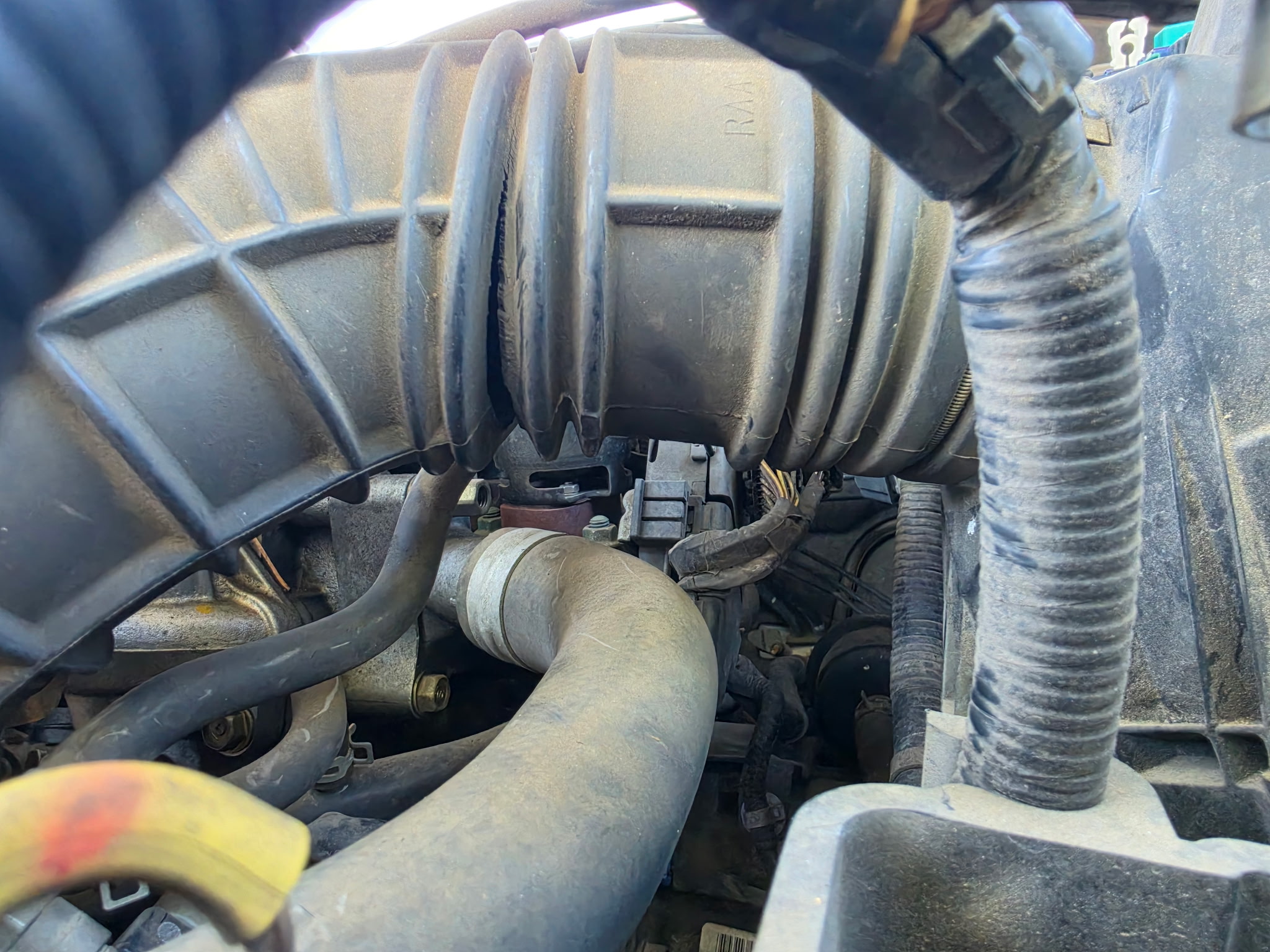
What Does the Air Intake System Actually Do?
Every internal combustion engine needs a precise mix of air and fuel to run properly. The air intake system is responsible for pulling in outside air, filtering it, and delivering it to the engine in a controlled, measured way. When that system is clean and unrestricted, the engine responds quickly, idles smoothly, and gets reasonable fuel economy.
The accordion-style tubing you see running from the air filter housing to the throttle body is not just a hose. It channels air while also dampening noise and protecting the engine from unfiltered debris. The air filter housing itself holds the filter element, which catches dust, pollen, and road grit before any of it reaches the engine internals.
Over time, oil vapor from the crankcase ventilation system coats the inside of that tubing and the throttle body with a sticky film. Dust sticks to that film. Carbon from combustion gases works its way back through the intake. The result is a partially restricted airway that the engine's sensors try to compensate for, usually by adjusting fuel trim, which costs you efficiency.
What Are the Signs That an Air Intake Cleaning Is Overdue?
Rough Idle or Hesitation
A dirty throttle body is one of the more common causes of a rough idle that mechanics see. The throttle plate sits inside a bore, and when carbon builds up around the edges, the engine struggles to maintain a stable idle speed. You might notice the RPMs hunting up and down at a stoplight, or the car shuddering slightly when you first start it cold.
Reduced Throttle Response
If the car feels sluggish off the line or takes a beat longer to respond when you press the accelerator, restricted airflow is worth investigating. The engine management system can compensate for a lot, but it has limits. Once buildup gets significant enough, no amount of sensor adjustment fully makes up for the reduced air volume.
Drop in Fuel Economy
This one is subtle and easy to miss because it happens gradually. If you are filling up more often than you used to without any obvious change in your driving habits, the intake system is one of several things worth checking. A clogged air filter alone can noticeably affect fuel economy, and a dirty throttle body compounds the problem.
What Does an Air Intake Cleaning Actually Involve?
The process is more involved than just swapping the air filter, though that is part of it. A proper cleaning typically includes removing the intake tubing to inspect it for cracks or oil buildup, cleaning the throttle body bore and plate with a dedicated throttle body cleaner, and checking the mass airflow sensor for contamination.
The mass airflow sensor deserves attention because it measures the volume of air entering the engine and tells the fuel system how much fuel to inject. A contaminated MAF sensor sends inaccurate readings, which throws off the fuel mixture. Cleaning it with the correct sensor-safe spray is a straightforward step that gets overlooked more often than it should be.
On some vehicles, the intake manifold passages themselves accumulate carbon deposits, particularly on direct-injection engines where fuel is not sprayed past the intake valves to keep them clean. That type of buildup requires more involved cleaning methods, sometimes including walnut blasting or chemical treatments, and it is worth knowing whether your engine uses direct injection before assuming a basic cleaning will cover everything.
How Often Should You Have the Intake System Cleaned?
There is no single universal interval because it depends on the engine design, how the vehicle is used, and whether the PCV system is functioning correctly. A vehicle that does a lot of short trips never fully warming up will accumulate oil vapor residue faster than one driven mostly on highways.
As a general guideline, inspecting the throttle body and intake tubing every 30,000 miles is reasonable for most vehicles. If you notice any of the symptoms described above before that interval, it is worth having someone take a look sooner. Catching buildup early means a simpler cleaning rather than a more involved job later.
Replacing the air filter on the manufacturer's recommended schedule is the single easiest thing you can do to protect the rest of the intake system. A clogged filter forces the engine to pull harder, which can draw more oil vapor through the PCV system and accelerate buildup downstream.
Why Having This Done at Your Location Makes Sense
Air intake cleaning is exactly the kind of job that does not require a lift or a shop floor. A mechanic with the right tools and cleaning supplies can do this work in a driveway or parking lot without any issue. For drivers who do not want to arrange a tow or sit in a waiting room, a mobile mechanic is a practical option.
Any Hour Mobile Mechanic handles this type of service throughout the area and is available around the clock. If you want to read through more maintenance topics before deciding what your car needs, the resource hub has additional information worth browsing. And if you already know what you need, the team at Any Hour Mobile Mechanic can come to you wherever the car happens to be. Give them a call at (318) 381-5033 if you want to talk through what your vehicle needs.
How do I know if my air intake needs cleaning?
Common signs include a rough or unstable idle, sluggish throttle response, and a gradual drop in fuel economy. A mechanic can inspect the throttle body and intake tubing to confirm whether buildup is the cause.
Is air intake cleaning worth it?
For a vehicle showing symptoms like rough idle or reduced throttle response, cleaning the intake system often resolves the issue without replacing any parts. It is a lower-cost service that can restore performance and efficiency when buildup is the root cause.
How long does an air intake cleaning take?
A basic throttle body and intake cleaning typically takes under an hour for most vehicles. More involved cleaning of intake manifold passages on direct-injection engines can take longer depending on the severity of the buildup.
Can a mobile mechanic clean the air intake near me in Plano?
Yes. Any Hour Mobile Mechanic performs air intake cleaning at your home, office, or roadside location throughout the Plano area. The service does not require a shop or a lift.
Does cleaning the air intake improve gas mileage?
It can, particularly if a clogged air filter or dirty throttle body has been forcing the engine to compensate with a richer fuel mixture. Results vary depending on how restricted the system was before cleaning.
Find us on Google Call (318) 381-5033 anytime.
Any Hour Mobile Mechanic - mobile mechanic serving Plano, TX. (318) 381-5033.


Comments
Post a Comment